For decades, ERP systems have been built around one core idea:
Collect data → Generate reports → Let humans decide.
And for a long time, this approach worked.
Businesses relied on:
- Daily stock reports
- Weekly sales summaries
- Monthly profit and loss statements
- Periodic production variance reports
Managers reviewed these reports, discussed them in meetings, and took decisions.
But in today’s business environment, something has fundamentally changed.
Decisions can no longer wait for reports.
Problems don’t announce themselves politely at month-end.
By the time a report tells you something went wrong, the damage is often already done.
Having worked closely with ERP systems for nearly two decades—designing, implementing, fixing, and sometimes completely re-engineering them—I have seen this shift clearly:
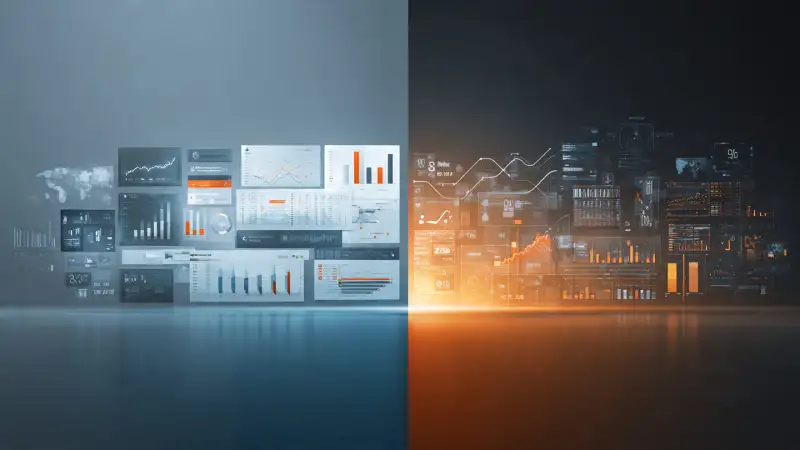
ERP is moving from reporting what happened to predicting what is about to happen.
This blog explains how AI is changing ERP decision-making—from reports to predictions—and why this shift matters more than most businesses realize.
The Traditional ERP Mindset: “Show Me the Report”
Traditional ERP systems are excellent at one thing:
capturing transactions accurately.
They record:
- What was purchased
- What was sold
- What was produced
- What was posted to accounts
From this data, they generate reports.
And most organizations still run ERP this way:
- “Show me today’s stock report”
- “Send me last month’s sales summary”
- “Let’s review variance at month-end”
The problem is not the reports.
The problem is timing.
Reports tell you what already happened.
In 2026 and beyond, businesses need to know:
- What is likely to happen next
- Where risks are building up
- Which decision needs attention now, not later
This is where AI changes the role of ERP.
Why Reports Alone Are No Longer Enough
Let’s look at a very common situation.
A finance head reviews a report and says:
“Margins are down this month.”
A production manager replies:
“Yes, but the issue started weeks ago.”
A purchase manager adds:
“Supplier delays were visible earlier, but no one flagged it.”
Everyone had data.
Everyone had reports.
But no one had early signals.
This is the gap AI fills.
From Reporting to Predicting: What Really Changes?
Traditional ERP answers questions like:
- What is the current stock?
- How much did we sell last month?
- What was the cost variance?
AI-assisted ERP starts answering different questions:
- When will this item go out of stock?
- Which customer is becoming unprofitable?
- Which production order is likely to miss its deadline?
- Where is cost likely to spike next?
This shift—from descriptive to predictive—changes how decisions are made.
Real-Life Experience: Reports Arrive Too Late
In many ERP projects I’ve worked on, one pattern repeats.
During review meetings, managers often say:
“If we had known this earlier, we could have avoided it.”
The ERP had the data.
But it didn’t highlight the problem in time.
AI does not replace reports.
It adds a layer of intelligence on top of them.
Inventory: From Stock Reports to Shortage Predictions
The Old Way (Reports)
Traditional ERP gives you:
- Current stock
- Reorder level
- Consumption history
Yet businesses still face:
- Last-minute purchases
- Production stoppages
- Excess slow-moving inventory
What Happens in Reality
A store manager once told me:
“Our ERP always shows stock, but never the stock we actually need.”
This happens because reports show quantity, not behavior.
The AI Shift (Predictions)
AI looks at:
- Consumption trends
- Sales velocity
- Lead times
- Seasonality
Instead of reporting:
“Stock available: 1,200 units”
AI predicts:
“At the current rate, this item will be short in 10 days.”
That one sentence changes planning completely.
Sales & Margins: From Revenue Reports to Profit Warnings
The Old Way (Reports)
ERP reports show:
- Sales by customer
- Sales by product
- Invoice totals
Sales teams focus on growth.
Finance teams focus on margin—often too late.
Real-Life Problem
In many companies I’ve worked with:
- Top customers were also low-margin customers
- Discounts became routine
- Returns quietly ate into profits
The ERP had all the data—but no insight.
The AI Shift (Predictions)
AI continuously compares:
- Revenue vs actual margin
- Discount behavior over time
- Return frequency
- Customer buying patterns
Instead of a report saying:
“Sales increased by 18%”
AI flags:
“Customer X’s profitability has dropped steadily over the last three months.”
That insight triggers action before profits disappear.
Manufacturing: From Variance Reports to Delay Forecasts
The Old Way (Reports)
Traditional ERP compares:
- Planned vs actual time
- Planned vs actual quantity
But this comparison usually happens after production is complete.
What I’ve Seen on the Ground
Production managers often say:
“We know which machine causes problems—but the ERP doesn’t tell us.”
The data exists.
But it’s buried in reports.
The AI Shift (Predictions)
AI observes patterns like:
- Which work centers repeatedly cause delays
- Which products are always underestimated
- Which shifts perform better for certain operations
Instead of reporting:
“Production order delayed by 2 hours”
AI predicts:
“This order is likely to miss its deadline based on past patterns.”
This allows proactive decisions—rescheduling, resource allocation, or escalation.
Finance: From Month-End Reports to Early Alerts
The Old Way (Reports)
Finance teams rely on:
- Trial balance
- Cost variance reports
- Month-end closing statements
By the time issues appear, the period is already closed.
Real-Life Experience
In one project, a costing issue continued for several months because:
- Entries were technically correct
- Variance reports were reviewed late
The ERP did its job.
But the business still suffered.
The AI Shift (Predictions)
AI monitors:
- Cost behavior across jobs
- Unusual postings
- Sudden spikes in expenses
Instead of waiting for month-end, AI alerts:
“This job’s material cost is trending higher than similar jobs.”
That early warning saves time, money, and stress.
A Short Reality Check
If these examples feel familiar, you’re not alone.
In most ERP environments, the problem is not lack of data.
The problem is lack of timely insight.
AI doesn’t magically fix ERP.
It changes how ERP data is used for decisions.
AI Does Not Replace Managers — It Supports Them
There is a common fear:
“Will AI replace decision-makers?”
From real experience, the answer is no.
AI does not decide.
AI highlights, suggests, and warns.
Think of AI as:
- A silent analyst
- A pattern observer
- A risk indicator
The final decision always remains human.
Why Prediction Without Process Still Fails
AI works only as well as the data it learns from.
If:
- Processes are broken
- Data is inconsistent
- Users bypass ERP discipline
AI will amplify chaos.
That’s why process maturity comes before prediction.
Cyprus ERP: Building the Right Foundation First
Cyprus ERP is currently not AI-enabled—and that is intentional.
Cyprus ERP focuses on:
- Clear workflows
- Strong costing structure
- Simple, understandable screens
- Operational discipline
Many businesses I’ve worked with first needed:
- Process stability
- Clean data
- Control over transactions
Cyprus ERP delivers that foundation.
Without disciplined data, AI has nothing meaningful to predict.
What’s Next for Cyprus ERP
Cyprus ERP’s AI capabilities are planned to be released from 1st February 2027.
This ensures that when AI arrives:
- It learns from clean data
- It supports mature processes
- It delivers meaningful predictions—not noise
Onfinity ERP: From Reports to Predictions Today
Onfinity ERP is AI-enabled today, designed for organizations that have moved beyond basic reporting.
In Onfinity ERP, AI is used for:
- Predictive demand planning
- Inventory movement intelligence
- Margin and profitability insights
- Early warning signals across operations
The focus is not on flashy dashboards.
The focus is on:
- Better decisions
- Fewer surprises
- Proactive control
Onfinity ERP shows how ERP evolves from:
“Here is the report”
to
“Here is what you should watch next.”
The Bigger Shift: ERP as a Decision System
ERP is no longer just a system of record.
It is becoming a system of guidance.
Reports tell you the past.
Predictions help you protect the future.
In a fast-moving business environment, this shift is not optional.
Final Thoughts: The Future Belongs to Predictive ERP
Reports will always be necessary.
Compliance will always matter.
Transactions will always need accuracy.
But decision-making cannot stay reactive.
AI does not replace ERP.
It elevates it.
The real question businesses should ask is not:
“Do we have AI in our ERP?”
But:
“Does our ERP help us see problems before they hurt us?”
About the Author
Surya Sagar
Founder & ERP Solution Architect – BRS Infotek
Surya Sagar has over 18 years of hands-on ERP experience, working across manufacturing, trading, and service industries in multiple countries.
He has been deeply involved in the design and implementation of Onfinity ERP and is the architect behind Cyprus ERP, both built to solve real operational problems—not just showcase features.
His belief is simple:
ERP success is not about reports.
It is about timely insight, discipline, and confident decisions.
A Gentle Next Step
If you are evaluating whether your ERP should remain report-driven or evolve toward predictive decision-making, understanding your current process maturity is the first step.
Exploring real workflows often reveals more than feature comparisons—and helps you choose the right ERP direction with confidence.


