If Your ERP Profit Changes Overnight, Your Costing Method Might Be the Problem
If your ERP shows profit today and suddenly corrects it tomorrow, you are not alone.
Many businesses face:
- Sudden margin fluctuations
- Inventory value mismatches
- Confusion between purchase price and actual cost
And in most cases, the root cause is not ERP—it’s the wrong costing method.
After 18+ years of ERP implementation across industries, I’ve seen one common mistake:
Businesses apply a single costing method to all products without understanding how different product categories behave.
This blog will help you understand Weighted Average Purchase Order (PO) Costing, where it actually works, where it fails, and how to design costing correctly inside ERP.
What is Weighted Average Purchase Order Costing?
Weighted Average Purchase Order Costing calculates inventory cost using the purchase order price, even before the vendor invoice is posted.
In ERP systems, this is not a static formula—it is a dynamic moving average calculation that updates cost with every stock receipt.
Actual ERP Formula (Dynamic Moving Average)

This is the real engine running behind your ERP costing.
Why This Formula Matters in Real Business
Every time stock is received:
- Existing inventory value is recalculated
- New purchase value is added
- Cost becomes a rolling average
Example
Before Purchase:
- 100 units @ ₹50 → ₹5000
New Purchase:
- 50 units @ ₹60 → ₹3000
New Cost:
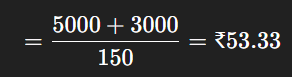
This new cost (₹53.33) is now used for:
- Sales
- Production consumption
- Inventory valuation
How to Know If Your ERP Costing is Wrong
You might already be facing costing issues if:
- Profit keeps fluctuating without business reason
- Inventory value doesn’t match actual purchase cost
- Frequent adjustments are required after invoice posting
- Finance and operations teams blame each other
If any of this sounds familiar, your costing design needs correction.
The Most Important Concept: Category-Based Costing
Here’s the reality from real ERP implementations:
No successful organization uses one costing method for all products.
Different product categories behave differently—and must be treated differently.
Product Categories and Recommended Costing
| Category | Nature | Recommended Costing | Why |
| Packing Material | Low value, local | Weighted Avg PO | Stable pricing |
| Raw Material (RM) | High value | FIFO / Avg Invoice | Accuracy critical |
| Semi-Finished (SFG) | Production stage | Standard Cost | Controlled costing |
| Finished Goods (FG) | Final output | Standard Cost | Stable pricing |
| Consumables | Indirect use | Weighted Avg PO | Simplicity |
Where Weighted Average PO Costing Works Best
✔ Packing Materials
- Cartons, labels, packaging
- Local procurement
- Minimal price variation
✔ Consumables
- Lubricants, maintenance items
- Low financial impact
In these categories, PO price ≈ Invoice price → minimal risk.
Where You Should NOT Use Weighted Avg PO
Avoid this method in:
- Import-heavy businesses
- Commodity trading (steel, chemicals)
- Industries with high price volatility
- Long procurement cycles
Because PO price ≠ actual cost.
Real-Life Example: When It Works Perfectly
Business:
FMCG company (carton purchases)
- PO1: 1000 units @ ₹10
- PO2: 2000 units @ ₹10.20
Average ≈ ₹10.13
Invoice difference: negligible
Result:
- Smooth costing
- No financial distortion
- Easy ERP management
Real-Life Example: When It Fails
Industry: Metal trading
Situation:
- PO price: ₹700/kg
- Invoice price: ₹750/kg
- Goods sold before invoice
What Happened:
- ERP used ₹700 as cost
- Sales showed higher profit
- Invoice posted later → cost increased
- Profit corrected downward
Impact:
- Margin instability
- Management confusion
- Loss of trust in ERP
Root cause: Wrong costing method for Raw Material.
The Costing Chain Impact (Critical Insight)
One wrong costing decision affects the entire business:
Wrong RM Cost
↓
Wrong Production Cost
↓
Wrong FG Cost
↓
Wrong Sales Margin
↓
Wrong Business Decisions
Why Raw Materials Should Avoid PO-Based Costing
Raw materials often include:
- Price fluctuations
- Freight & duties
- Currency changes
Using PO-based costing here leads to:
- Incorrect production cost
- Misleading margins
- Financial inconsistencies
Why SFG and FG Use Standard Costing
Semi-Finished and Finished Goods are manufactured, not purchased.
Their cost comes from:
- BOM
- Routing
- Overheads
Benefits of Standard Cost:
- Stable pricing
- Variance tracking
- Better planning and control
Hidden Consequences of Weighted Avg PO Costing
1. Profit Distortion
Profit looks higher initially, then corrects later
2. Inventory Misvaluation
Stock value differs from actual cost
3. Timing Dependency
Cost depends on transaction timing
4. Re-costing Complexity
ERP must adjust historical transactions
A Very Relatable Business Case
Business: Plastic manufacturer
Mistake:
Used Weighted Avg PO for all items
Result:
- Raw material cost incorrect
- Finished goods cost unstable
- Margins fluctuating
Fix:
- Packing → Weighted Avg PO
- RM → Weighted Avg Invoice
- FG → Standard Cost
Outcome:
- Stable financials
- Accurate costing
- Better decision-making
Practical ERP Implementation Approach
Step 1: Define Product Categories
RM, SFG, FG, Packing, Consumables
Step 2: Assign Costing Method
Category-wise—not random
Step 3: Configure Cost Flow
RM → Production → FG
Step 4: Enable Re-costing
Handle invoice differences
Step 5: Monitor Variances
PO vs Invoice, Standard vs Actual
How Cyprus ERP and Onfinity ERP Solve This
Most ERP systems fail because they treat costing as just a formula.
Cyprus ERP and Onfinity ERP approach it differently.
✔ Category-Based Costing Engine
Define costing method per product category
✔ Dynamic Moving Average Logic
Uses real-time Available + Incoming formula
✔ Multiple Costing Methods
- Weighted Avg PO
- Weighted Avg Invoice
- FIFO / LIFO
- Standard Cost
✔ Advanced Re-costing Engine
Handles:
- Backdated transactions
- Cost corrections
- High data volumes
✔ Full Manufacturing Cost Flow
RM → SFG → FG with BOM integration
The focus is simple:
Costing should reflect how your business actually operates—not just how the system calculates.
Final Thoughts
Weighted Average Purchase Order costing is powerful—but only when used correctly.
The real success lies in:
Using the right costing method for the right product category.
Key Takeaways
- Packing & Consumables → Weighted Avg PO ✔
- Raw Material → FIFO / Avg Invoice ✔
- SFG & FG → Standard Cost ✔
Need Help Designing Costing in Your ERP?
If you are facing:
- Incorrect inventory valuation
- Fluctuating margins
- Confusion between PO and Invoice cost
You are not alone—and this can be fixed.
We help businesses design category-based costing models that bring:
- Accuracy in financials
- Stability in margins
- Trust in ERP
Reach out for:
- Costing assessment
- ERP optimization
- Onfinity/Cyprus ERP demo
About the Author
Surya Sagar
Founder & ERP Solution Architect, BRS Infotek
With 18+ years of ERP implementation experience across global industries, Surya Sagar specializes in designing practical, scalable ERP solutions. He has contributed to platforms like Onfinity ERP (Formerly Vienna Advantage) and is the architect behind Cyprus ERP.
His expertise includes:
- ERP costing architecture
- Manufacturing & supply chain optimization
- Financial process automation
- High-volume ERP system design


