If you’ve ever waited weeks for a raw material that everyone swore was “already ordered,” or rushed an expensive last-minute shipment because inventory numbers turned out to be wrong, you already understand how fragile supply chains really are.
Over the years, I’ve seen factories sit idle because a bill of materials didn’t match actual stock. I’ve walked through warehouses overflowing with slow-moving items while critical components were constantly out of stock. I’ve sat with finance teams at month-end, trying to explain cost overruns that nobody saw coming.
After 18+ years of working hands-on with ERP systems—across manufacturing, trading, and distribution businesses—one thing has become very clear:
Supply chain problems are rarely about effort. They’re about visibility, coordination, and control.
And when those three elements come together properly, a well-implemented ERP system becomes the single most powerful tool for supply chain optimization.
This article isn’t about buzzwords like AI, blockchain, or “next-gen logistics.” It’s about real gains from real systems, built and used by real people.
What Supply Chain Optimization Actually Means (In Real Life)
In theory, supply chain optimization sounds simple:
Get the right product, to the right place, at the right time, at the lowest possible cost.
But in reality, every business is juggling:
- Uncertain demand
- Supplier delays
- Rising inventory costs
- Production constraints
- Customer delivery promises
When these elements are managed in isolation—through spreadsheets, emails, and disconnected tools—small errors quickly turn into big problems.
Supply chain optimization doesn’t mean perfection.
It means fewer surprises, faster decisions, and better trade-offs.
And that’s exactly where ERP plays its role—not by replacing people’s judgment, but by giving them reliable, real-time information to work with.
Why ERP Is the Backbone of Supply Chain Optimization
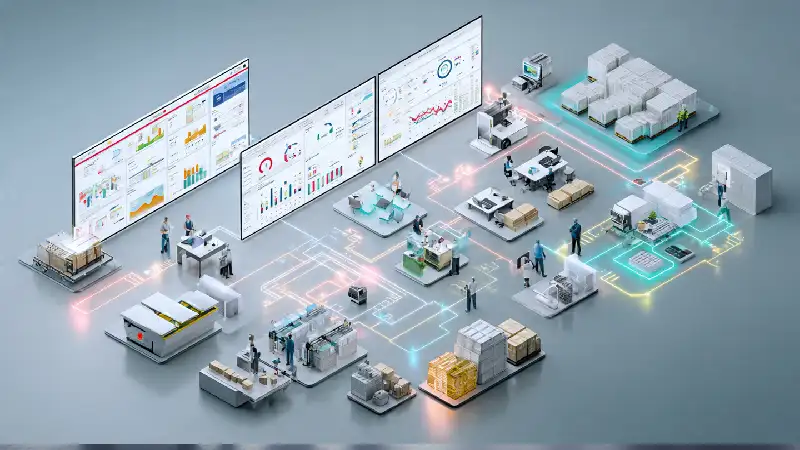
An ERP system, when used properly, acts as the central nervous system of your supply chain.
It connects:
- Sales demand
- Inventory availability
- Procurement decisions
- Production planning
- Warehousing and logistics
- Financial impact
Without ERP, these functions operate like separate islands. With ERP, they operate as one connected flow.
Let’s look at where real, measurable gains come from.
1. Real-Time Inventory Visibility: Ending the Guesswork
One of the most common phrases I hear during ERP assessments is:
“The system says we have stock, but the warehouse says we don’t.”
That gap destroys trust—and leads teams straight back to Excel.
A properly implemented ERP ensures that every stock movement is captured immediately:
- Goods receipts
- Issues to production
- Sales dispatches
- Returns
- Transfers between locations
This eliminates:
- Phantom stock
- Duplicate purchases
- Emergency buying
- Missed deliveries
When everyone—from procurement to sales—looks at the same real-time numbers, decisions become calmer and more confident.
2. Demand Planning Based on Reality, Not Gut Feel
Many businesses still plan demand based on last year’s numbers or “experience.” While experience matters, relying on it alone becomes dangerous as volumes grow.
ERP allows you to plan demand using:
- Actual sales history
- Seasonal trends
- Open sales orders
- Customer buying patterns
At a food processing client in Gujarat, we used ERP-driven demand planning to rebalance purchasing. Within six months:
- Excess raw material inventory dropped by 32%
- Cash flow improved significantly
- Service levels stayed intact—no stockouts
The improvement didn’t come from complex algorithms.
It came from consistent, visible data.
3. Procurement That Responds to Need, Not Panic
Reactive procurement is one of the biggest cost drivers in any supply chain.
You’ve seen it:
- “We’re out of stock—order immediately.”
- Air freight instead of sea.
- Emergency purchases at premium prices.
ERP replaces panic with predictability.
With properly defined reorder levels and lead times, ERP can:
- Automatically suggest purchase orders
- Warn buyers weeks before shortages occur
- Track supplier commitments and delays
Procurement becomes a planned activity instead of a daily firefight.
4. Production Planning That Matches the Real World
Sales teams often promise delivery dates without visibility into material availability or production capacity. The shop floor then absorbs the pressure.
This disconnect is where ERP’s Material Requirements Planning (MRP) makes a real difference.
MRP helps answer practical questions:
- Do we have all components for next week’s orders?
- Which materials will run short—and when?
- Can production be rescheduled if a supplier delays?
At a metal fabrication company in Pune, ERP-based MRP reduced production delays by 45% in the first quarter—simply by showing planners material gaps before work orders were released.
5. End-to-End Traceability: Control When Things Go Wrong
No supply chain is perfect. Issues will happen.
What matters is how quickly you can respond.
ERP enables end-to-end traceability:
- From raw material lot
- To production batch
- To finished goods
- To customer shipment
One client avoided a large-scale product recall because their ERP traced a quality issue back to a single supplier batch within minutes. Without that visibility, the impact would have been far more costly.
A Real-Life Story: Turning Chaos into Control in Dubai
A few years ago, I worked with an industrial distributor in Dubai supplying materials to construction projects across the UAE.
On paper, the business was doing well. In reality, the supply chain was constantly under stress.
The symptoms were familiar:
- High-demand items were frequently out of stock
- The warehouse was full, yet nothing seemed available
- Sales promised next-day delivery without confirmation
- Inventory was updated weekly in Excel
- Purchasing ordered based on instinct
The consequences were painful:
- Expensive emergency shipments
- Angry customers switching suppliers
- Huge amounts of cash locked in excess inventory
We implemented a lean ERP focused on real-time inventory, automated reorder points, and tight integration between sales, warehouse, and procurement.
Within three months:
- Stockouts reduced by 68%
- Excess inventory released over $200,000+ in working capital
- On-time delivery improved to 96%
But the biggest change wasn’t in the numbers.
The warehouse manager—who used to work weekends just to “catch up”—finally trusted the system. The stress dropped. The team worked proactively instead of reactively.
That’s what supply chain optimization looks like in real life.
Why Many ERP Implementations Fail to Optimize Supply Chains
Here’s an uncomfortable truth:
Most ERP failures are not software failures. They are implementation and mindset failures.
I’ve seen companies invest heavily in “enterprise-grade” ERP systems, only to:
- Over-customize until upgrades become impossible
- Automate broken processes instead of fixing them
- Train users on screens, not outcomes
The result is a digital version of the same chaos.
These lessons shaped how we approach ERP at BRS Infotek.
What a Practical Supply Chain ERP Must Deliver
You don’t need hundreds of features. You need a few fundamentals that work reliably, every day.
1. A Single Source of Truth
One inventory number. One production plan. One financial view. No parallel spreadsheets.
2. Proactive Alerts
Not reports after the damage is done—but warnings before it happens:
- Low stock alerts
- Supplier delays
- Upcoming material shortages
3. Integrated Procure-to-Pay Flow
From demand signal to purchase order, receipt, invoice matching, and payment—without manual handoffs.
4. Clear, Visual Dashboards
Simple views showing:
- Inventory turnover
- Service levels
- Supplier performance
- Cash tied up in stock
5. Configuration Over Customization
Processes should be adapted through settings—not code that breaks with every update.
This philosophy is embedded into Cyprus ERP, which we co-designed based on years of real-world supply chain challenges.
Common Myths About ERP and Supply Chain Optimization
Myth 1: ERP is only for large companies
Reality: Smaller businesses often gain more because they lack buffer teams and safety stock.
Myth 2: Optimize later—just go live first
Reality: If supply chain discipline isn’t built from Day 1, the system will reinforce bad habits.
Myth 3: Excel is good enough
Reality: Excel fails the moment you introduce multiple locations, batch tracking, lead time variability, or real costing.
How to Start the Right Way
If you’re serious about optimizing your supply chain with ERP, start here:
- Identify Your Biggest Pain Points
Is it stockouts, excess inventory, late deliveries, or cost surprises? - Choose an ERP Proven in Your Industry
Manufacturing, trading, and distribution have very different realities. - Focus on Data Discipline First
Clean item masters, BOMs, vendor data—these matter more than fancy reports.
Final Thought: Optimization Is a Habit, Not a One-Time Project
Supply chain excellence doesn’t come from a single implementation or report.
It comes from daily, data-driven decisions, supported by a system your teams actually trust and use.
Your ERP should not be a background system checked only during audits.
It should be the daily operating system for planners, buyers, warehouse teams, and production managers.
When that happens, you stop reacting to problems—and start preventing them.
And that’s when real gains begin.
About the Author
Surya Sagar is the Founder and ERP Solution Architect at BRS Infotek.
With 18+ years of hands-on ERP experience, he has guided 100+ businesses—from small workshops to multi-country distribution networks—through ERP-driven operational and supply chain transformation.
He co-designed Cyprus ERP, BRS Infotek’s in-house ERP built on Adempiere, to solve real operational problems with clarity and control.
He also leads Onfinity ERP implementations as BRS Infotek’s legal and implementation partner, helping growing and enterprise-ready organizations scale with confidence.
His belief is simple:
ERP should simplify operations—not complicate them.
👉 Want to see how Cyprus ERP or Onfinity ERP can optimize your supply chain using your own data?
Request a practical, no-fluff demo with BRS Infotek at Cyprus ERP or Onfinity ERP
