(From the Shop Floor, Not the Sales Brochure)
If you’ve ever walked through a factory during a busy production day, you already know this truth:
Manufacturing is controlled chaos.
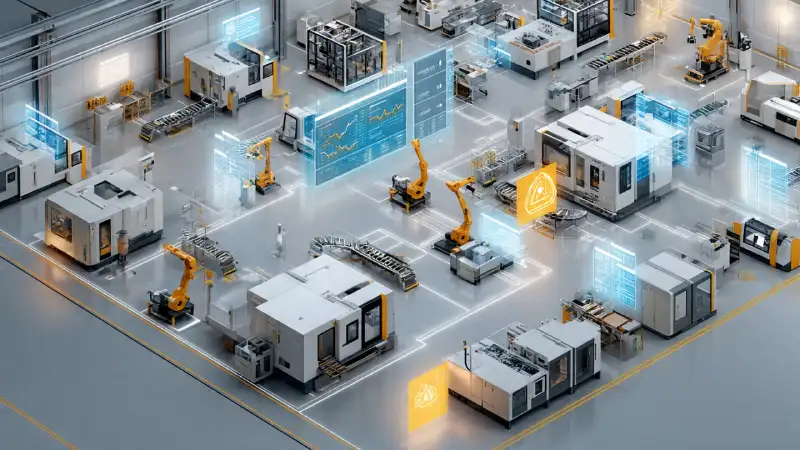
Machines are running at full speed. Materials are moving between stores and shop floors. Operators are making quick decisions to keep lines running. Managers are juggling delivery dates, quality issues, and cost pressures—all at the same time.
This is exactly why manufacturing ERP is different from ERP used in trading or service companies.
A factory doesn’t just record transactions.
It creates physical products.
And once something goes wrong on the shop floor, you can’t undo it with a journal entry or a correction voucher.
Over the years, I’ve worked closely with manufacturers across cables, engineering goods, healthcare supplies, food processing, and discrete manufacturing. Some had modern ERP systems. Many were still running on legacy setups—patched together with Excel files, emails, handwritten registers, and years of tribal knowledge.
And almost all of them asked the same question at some point:
“What features should a manufacturing ERP really have?”
Not what vendors list on sales slides—but what factories actually need to survive, scale, and stay profitable.
Let’s talk about that.
Why Manufacturing ERP Is Not “Just ERP”
One of the most expensive mistakes companies make is selecting ERP software based primarily on finance or reporting needs, assuming manufacturing can be “handled later” through customization.
In practice, this approach almost always backfires.
A true manufacturing ERP must understand:
- How materials move inside a factory
- How production actually happens—not how it looks in flowcharts
- How quality issues, wastage, rework, and delays occur
- How a small issue on the shop floor can ripple across the entire supply chain
If your ERP does not reflect factory reality, people slowly stop trusting it.
And once trust is gone, adoption doesn’t fail loudly—it dies quietly.
1. Bill of Materials (BOM) That Matches Reality
On paper, BOMs look clean and logical.
On the shop floor, they rarely are.
A practical manufacturing ERP must support:
- Multi-level BOMs
- Alternate and substitute materials
- Customer-specific BOMs
- Engineering changes without breaking historical data
- BOMs that evolve over time
In many factories I’ve visited, BOMs still live in Excel because the ERP’s BOM structure is too rigid. That’s a serious warning sign.
If your ERP forces you to simplify reality just to fit the system, the data will always be wrong.
A good ERP understands one thing clearly:
BOMs are living documents, not static templates.
2. Production Planning That Respects Capacity
MRP looks impressive in demos.
In real factories, it often fails because it ignores constraints.
A manufacturing ERP must realistically consider:
- Machine capacity
- Shift timings
- Maintenance schedules
- Labor availability
- Bottlenecks on critical resources
Planning without capacity is just a wish list.
I’ve seen factories where the ERP released work orders assuming five machines were available—when only three were actually running. On paper, everything looked efficient. On the shop floor, people were firefighting all day.
Good ERP planning doesn’t aim for perfection.
It aims for achievable plans.
3. Work Orders That Operators Can Actually Use
One of the fastest ways to kill ERP adoption is designing work orders that only make sense to consultants.
Work orders must be:
- Simple and clear
- Aligned with how operators actually work
- Easy to update for progress, scrap, and delays
If operators feel the ERP slows them down, they will bypass it.
And once shop-floor data stops flowing into the system, management dashboards become fiction.
The best ERP systems don’t demand perfection from operators.
They support them.
4. Inventory That Knows Where Things Really Are
In manufacturing, inventory is not just “stock in” and “stock out.”
It includes:
- Raw materials
- Work-in-progress (WIP)
- Semi-finished goods
- Finished goods
- Scrap
- Rejected material
- Rework material
A manufacturing ERP must track status, not just quantity.
If the system shows material as available—but it’s actually under quality hold—you’re planning blind.
5. Lot, Batch, and Serial Traceability (Non-Negotiable)
This is where many legacy systems fail quietly—until they don’t.
Traceability isn’t just for regulated industries.
It’s about trust.
And this brings me to a real-life experience that still stays with me.
A Small Gap in Traceability—And a Big Hit to Trust
A few years back, I was working with a cable manufacturer in Malaysia. They produced custom cables based on customer specifications.
The company had been running on a legacy ERP system for over a decade. It started as a simple in-house tool, but over time it had become a patchwork of Excel files, email logs, and manual entries. Everyone knew its quirks and had built workarounds.
“It’s not pretty,” their operations manager once told me, “but we make it work.”
Then came the call that changed everything.
One of their biggest customers questioned a shipment that wasn’t fulfilled as expected. The uncomfortable part was this:
The company couldn’t clearly explain why.
The ERP technically had all the data—somewhere. But nothing was connected.
- Serial numbers were tracked in one place
- Material receipts in another
- Quality checks in a third
There was no single thread tying a finished cable back to its raw materials, production batch, and inspection results.
Instead of generating a report in minutes, the team spent three sleepless days digging through printed logs, archived emails, and handwritten shift notes—trying to reconstruct history after the fact.
The client paused all new orders pending a full audit. Worse, concerns quietly reached other players in the same industry. Word spread.
Inside the factory, the mood changed overnight.
Engineers felt they had failed—even though product quality wasn’t the real issue. Sales teams hesitated to commit delivery dates. Leadership realized something painful:
Their “good enough” ERP had become a business risk.
That was the wake-up call.
They didn’t just need a new ERP.
They needed one where traceability was built-in, not bolted on.
We implemented a manufacturing ERP with:
- Lot and serial tracking
- Automated quality checkpoints
- Full product genealogy
If a cable existed, the system knew:
- Which materials went into it
- Which machine produced it
- Which batch it belonged to
- Who approved it—and when
Here’s the lesson that stayed with me:
In manufacturing, ERP is part of your promise to the customer.
If you can’t prove what’s in your product—or where it came from—you’re not just risking efficiency.
You’re risking trust.
And once trust is lost, it’s painfully hard to rebuild.
6. Quality Management That’s Part of the Process
Quality cannot be an afterthought.
Manufacturing ERP must support:
- Incoming inspection
- In-process quality checks
- Final inspection
- Non-conformance handling
- Rework workflows
If quality data lives outside ERP, you’re missing half the picture.
Good ERP systems treat quality as part of production—not a separate department.
7. Costing That Reflects What Really Happened
Standard costing looks neat in finance meetings.
Actual costing tells the real story.
Manufacturing ERP should capture:
- Material consumption variances
- Labor time
- Machine usage
- Scrap and rework costs
Without this, profitability analysis becomes guesswork.
I’ve seen companies selling “profitable” products—only to discover later that hidden rework costs were silently eating margins.
ERP should reveal uncomfortable truths early—not hide them.
8. Seamless Integration with Finance
Manufacturing doesn’t end on the shop floor.
Your ERP must seamlessly connect:
- Production to inventory
- Inventory to accounting
- Costing to financial reporting
Manual postings are not control.
They are risk.
The best ERP systems post accounting entries automatically, based on real operational events.
9. Reporting That Answers Questions
Manufacturing leaders don’t want more reports.
They want clear answers.
ERP dashboards should tell you:
- What’s late—and why
- Where money is being lost
- Which machine is the bottleneck
- What’s blocked in quality
- What can be shipped today
If reports raise more questions than answers, something is wrong.
10. Flexibility Without Chaos
Factories evolve.
New products. New machines. New customers. New regulations.
A good manufacturing ERP allows change without breaking the system.
That doesn’t mean unlimited customization.
It means smart configuration and controlled extensions.
Final Thoughts: ERP Is a Factory Partner, Not Just Software
Manufacturing ERP isn’t about ticking feature checkboxes.
It’s about:
- Visibility
- Accountability
- Trust
- Control
The best ERP systems don’t make factories perfect.
They make problems visible early—when they’re still fixable.
And that, in my experience, is what separates factories that scale confidently from those that constantly firefight.
If there’s one thing I’ve learned over the years, it’s this:
Don’t wait for a customer to ask a question your ERP can’t answer.
Build the visibility early.
Because when the question comes—and it always does—you should be answering in seconds, not spreadsheets.
Want an ERP Built for Real People—Not Just Feature Lists?
After years inside factories, warehouses, accounts teams, and boardrooms, one thing became clear:
most ERPs are designed for consultants—not for the people who actually use them.
That insight shaped both Cyprus ERP and Onfinity ERP, implemented by BRS Infotek with a strong focus on real-world execution.
Cyprus ERP, built in-house by BRS Infotek on proven Adempiere foundations, embeds these lessons by default—delivering operational and financial clarity in weeks.
Onfinity ERP, where BRS Infotek is a legal and implementation partner, brings the same user-first thinking with added enterprise scalability.
What Makes Them Different
- Unified finance, inventory, sales, and manufacturing
- Simple, intuitive screens users adopt quickly
- Built-in role-based onboarding
- Smart configuration instead of fragile customizations
- Real-time costing, MRP, and reporting out of the box
- Clear, predictable implementation approach
Both ERPs focus on what actually improves accounting accuracy, reporting clarity, and operational flow.
👉 See Cyprus ERP or Onfinity ERP in action with your own data.
Request a no-fluff demo with BRS Infotek at www.cypruserp.com
About the Author
Surya Sagar
Founder & ERP Solution Architect – BRS Infotek
With 18+ years of hands-on ERP experience, he has implemented systems for businesses ranging from small fabrication units to multi-country manufacturing and distribution networks.
He co-designed Cyprus ERP and leads Onfinity ERP implementations as BRS Infotek’s legal partner.
His philosophy is simple:
ERP should simplify your life, not complicate it.
